

NYSC and The Duty Of Care
A Civic Call to Strengthen the Protection and Welfare of Corps Members Across Nigeria
Every year, tens of thousands of young Nigerians complete their education, pack their bags, and report to NYSC orientation camps. They go willingly, proudly, because service to the nation means something. They cross state lines. They live in unfamiliar communities. They teach in classrooms, staff hospitals, and contribute to development in places they have never been. This is one of the finest things Nigeria asks of its young people. And Nigeria owes every one of them a duty to bring them home safely.
Musa Usman Abba was a corps member serving in Kogi State when he was kidnapped and killed. He had completed his education and was fulfilling his national service with commitment. He was not a combatant. He was a young Nigerian doing what the nation asked of him. His death left a family without a son and a country without one of the young people it had invested in and called to serve. His story is the reason this conversation must be had, and the reason it must not stop until something changes.
Musa Usman Abba is not the only corps member whose service has come at a grave personal cost. Others have been caught in road accidents on difficult inter-state routes, affected by communal tensions, or faced medical emergencies in postings far from adequate health facilities. Each loss is a reminder that the infrastructure of protection around corps members must be as serious as the obligation of service itself.
The NYSC is one of Nigeria’s most enduring civic achievements. The unity it builds, the development it drives, and the national consciousness it cultivates in successive generations of graduates are values worth protecting. The programme has security alert systems, posting guidelines and welfare protocols that reflect a genuine institutional commitment to corps member safety. What this paper calls for is the resourcing, strengthening and enforcement of that commitment, so that every corps member who goes to serve can be confident that the system has their back.
WHAT NEEDS TO BE STRENGTHENED
- Security-informed deployment: Strengthening the integration of real-time security intelligence into deployment decisions would allow postings to be calibrated to the prevailing security environment in each location. A transparent, documented risk assessment process for each posting would give corps members and their families greater confidence, and give the NYSC a firmer operational foundation for every deployment it makes.
- Pre-deployment safety preparation: Expanding the safety component of orientation camp to include practical training on emergency communication, community risk awareness, personal security protocols and medical self-care would better equip corps members for the full range of environments they encounter across Nigeria.
- Emergency response capability: A dedicated corps member emergency response framework, with reliable contact lines, check-in systems for members in remote postings, and clear coordination protocols with state security commands, would reduce response times when corps members are in distress and demonstrate that their safety is a live institutional priority.
- Group Life Assurance review: The coverage levels, claims processing timelines and support available to the families of corps members who die or are injured in service should be commensurate with the sacrifice made. A review of the existing scheme with that standard as its benchmark would be a meaningful expression of the state’s regard for those who serve.
- Post-incident learning mechanism: A structured process for reviewing incidents in which corps members are harmed, assessing whether deployment and welfare protocols were appropriately applied and generating lessons for future practice, would strengthen institutional learning and signal a genuine commitment to continuous improvement.
- A national honour register: A publicly accessible record of corps members who have died in the course of service, recording their names, posting states and circumstances, would honour their sacrifice and provide a foundation of verified data for welfare planning and policy.
RECOMMENDATIONS
- Establish a Security Deployment Review Board with the mandate to assess security conditions across NYSC posting locations and provide documented risk guidance for deployment decisions, drawing on security professionals, civil society and NYSC alumni.
- Formally integrate security intelligence into NYSC deployment processes, ensuring that postings to elevated-risk locations are accompanied by documented mitigation plans reviewed at a senior institutional level.
- Develop and fully resource a comprehensive emergency response protocol for corps members, covering dedicated emergency contacts, remote check-in systems, medical support coordination and evacuation procedures, tested in practice and not held only on paper.
- Introduce a structured operational safety training module at NYSC orientation camp, covering personal security, emergency communication, community engagement and medical self-care, tailored to Nigerian posting conditions.
- Review and strengthen the NYSC Group Life Assurance scheme to ensure timely, proportionate support for families of corps members who give their lives or health in national service, accompanied by formal state acknowledgement of their sacrifice.
- Amend the NYSC Act to include an explicit duty of care provision, affirming in law the commitment of the state to the protection and welfare of corps members throughout their service year.
- Create and maintain a publicly accessible national honour register of corps members who have died in service, as a record of their contribution and a foundation for evidence-based welfare policy.
A STRONGER NYSC IS WITHIN REACH
The young Nigerians who serve under the NYSC banner carry the best of what this country can produce. They leave their comfort zones, cross state boundaries, and give a year of their lives to a nation that asked. Families send them with pride and with prayer. They deserve to come back. ST Tamandu Marine Patrol calls on the Federal Government, the NYSC Directorate and the National Assembly to act on these recommendations with the urgency that the welfare of Nigeria’s young people deserves.
We also call on civil society organisations, alumni bodies, professional associations and the media to sustain the conversation about corps member welfare, to celebrate the contributions of serving members, and to support every effort to make the NYSC the safe, strong, and meaningful institution that Nigeria’s young people deserve.
Musa Usman Abba went to serve his country with everything he had. His name belongs in a register of honour. Every corps member who follows him deserves to know that the nation they are serving is working every day to bring them home.
ST Tamandu Marine Patrol | De Norsemen Kclub International, Lagos Chapter | RC 7458 | www.santatamandu.org
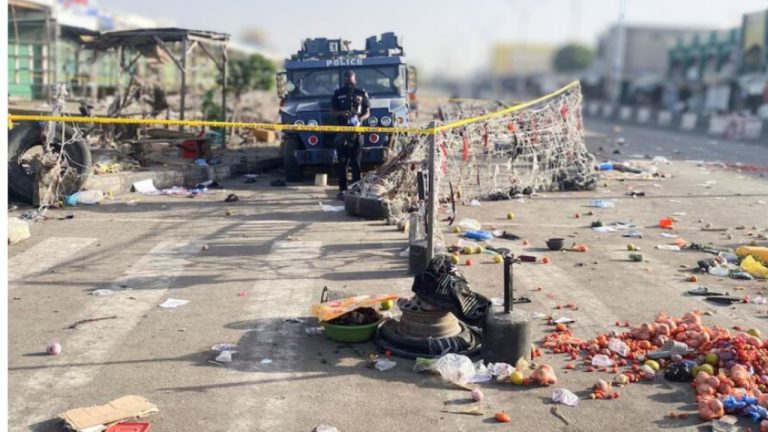


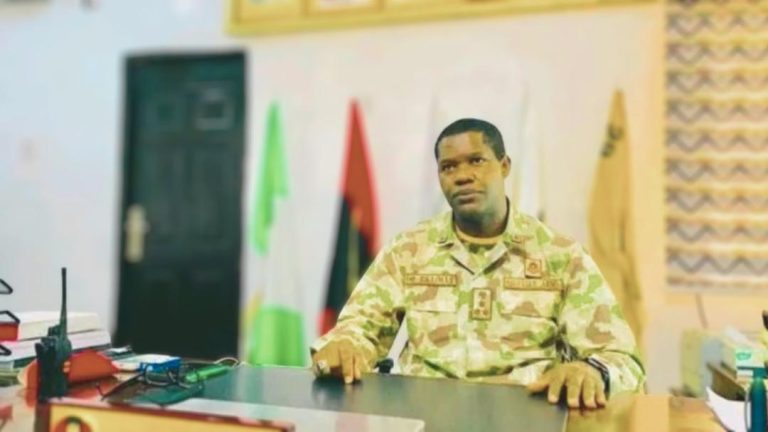

NYSC is no longer fun as at before,presently the life of innocent Nigerians is in jeopardy regarding the insecurity facing Nigeria.the last incident that happened were a copper was kidnapped, tortured n killed yet the FG,never for once address or say anything to that.sending someone to the northern part, following d rigorous road if one can’t pay for flight,becomes a challenge to most of them.”make everybodo serve for his/her state biko