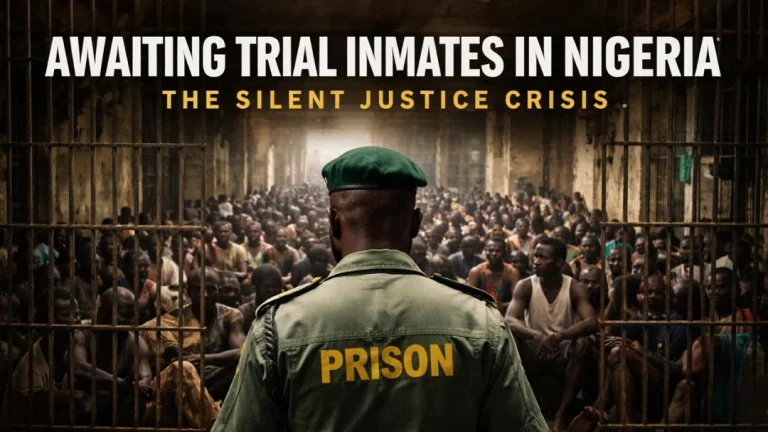

Kidnap-for-Ransom in Nigeria: A Call for Decisive Government Action
An Advocacy Statement by St Tamandu Marine Patrol (STMP) | A Chapter of De Norsemen Kclub International (DNKI) | March 2026.
Somewhere in Nigeria tonight, a family is waiting. The phone has rung. A calm, businesslike voice names a price for their child, parent, or breadwinner. They are told not to involve the police.
Families scramble to find money they do not have, realizing with dread that this is not random; it is a system.
This is a criminal economy. And it is growing.
By any honest assessment, Nigeria has become one of the most dangerous countries in the world for kidnapping.
Reports from the Global Organised Crime Index and the Council on Foreign Relations Nigeria Security Tracker show a dramatic rise in abductions, not random crimes, but a franchised, self-sustaining industry.
Between July 2024 and June 2025, 4,722 Nigerians were abducted in about 1,000 documented incidents. Ransoms totaling N2.23 trillion were paid between May 2023 and April 2024. Every ransom paid fuels weapons, logistics, and the recruitment of new abductors. This is not a crime wave; it is a criminal economy built on the suffering of citizens.
Stories Behind the Numbers
The human toll is staggering.
Musa Usman Abba, a 29-year-old graduate, was abducted while traveling from Gusau to Sokoto State in January 2026.
His family raised N10 million in ransom, but his abductors continued demanding money and went silent.
After weeks, videos showed him still in captivity.
This pattern of paying ransom and receiving nothing in return is familiar to many Nigerian families whose suffering never makes headlines.
Kidnappings affect all regions and social classes.
In January 2026, 163 worshippers were seized from a church in Kaduna State.
In February, a woman in Ekiti State was kidnapped, assaulted, and killed after ransom demands.
On March 1, a traditional ruler in Ebonyi State was kidnapped and later killed.
These events are part of a nationwide pattern stretching from north-west to south-east, from churches and highways to farming communities and royal palaces.
Kwara State: A Case Study
Kwara State demonstrates how rapidly the crisis deepens without intervention.
On December 26, 2025, nine residents were abducted from a traditional ruler’s palace. The community paid over N40 million in ransom.
Less than three months later, ten more people were abducted in nearby communities.
Previously, a massacre in Woro village killed over 160 people.
The cycle repeats because structural solutions are absent.
Kwara sits at a geographic gateway between Nigeria’s north and south-west, and what has taken root there is already spreading outward.
Government Response Has Been Insufficient
The Nigerian government has made some efforts: the Safe School Initiative, bilateral anti-kidnap security cells with the UK, and public appeals to stop paying ransom.
These steps are important, but not enough.
Families are still forced to pay ransoms because the state cannot guarantee protection.
Prosecution of the financial infrastructure behind kidnapping is almost nonexistent.
Ransoms move through informal channels, and credible allegations of security force complicity remain uninvestigated.
The NYSC continues to place graduates into unsafe regions, exposing them to preventable harm.
Awareness exists; decisive action does not.
What Must Change
St Tamandu Marine Patrol calls on the Nigerian government to:
- Enact enforceable legislation prohibiting state-facilitated ransom payments and protecting families acting under duress.
- Target the financing of kidnapping through the EFCC and NFIU by tracing, freezing, and prosecuting the architects of abduction networks.
- Investigate security force complicity independently, transparently, and with prosecutorial follow-through where evidence exists.
- Review NYSC deployment policies to prevent corps members from being placed in unsafe regions.
- Fund victim rehabilitation programs to address trauma, debt, and displacement for survivors and families of the deceased.
These are not optional measures; they are core obligations of a government that has allowed this criminal economy to flourish.
A Test of the State’s Commitment
The Nigerian government knows the scale of the problem.
What has been missing is the political will to act decisively.
Families should be able to send children to school, travel highways, or attend worship without fear of abduction.
This is the minimum promise of a functioning state, and it is being broken daily.
St Tamandu Marine Patrol joins the growing number of Nigerians demanding serious, enforceable action.
Musa Usman Abba remains captive.
Families in Kwara, Ebonyi, and Ekiti are still grieving.
The dead cannot speak for themselves. We speak for them.
Enough appeals. Enough initiatives. The people are waiting for results.