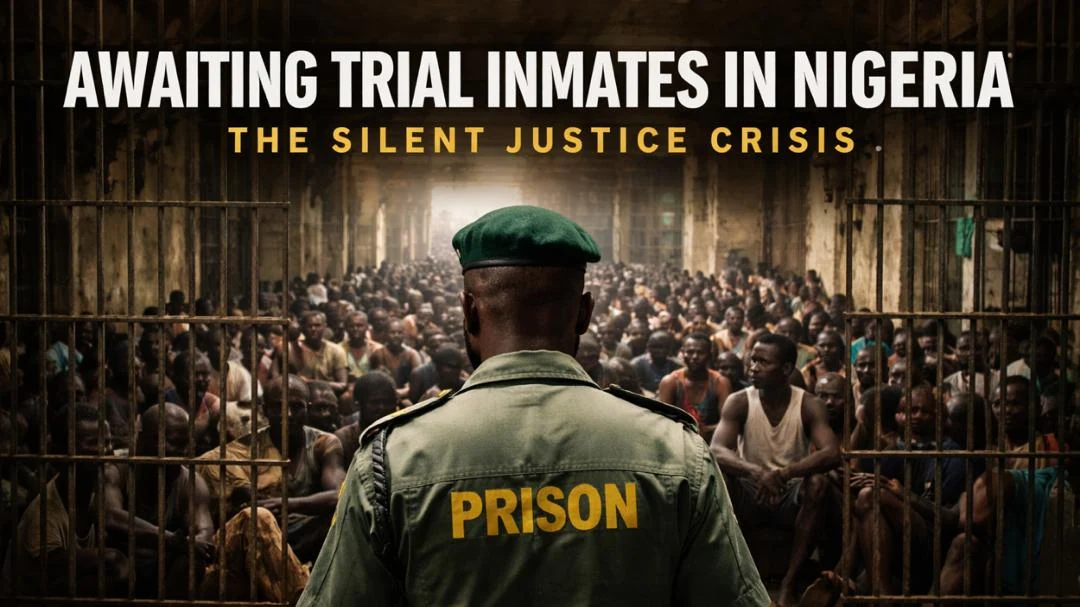
Awaiting Trial Inmates in Nigeria: The Silent Justice Crisis
Advocacy Series
As part of our commitment to Service to Humanity, ST Tamandu Marine Patrol recently visited a correctional facility in Lagos to donate and spend time with people that society has largely chosen to forget. We went in with supplies. We left with a conversation we cannot stop thinking about.
It was an officer who said it, plainly and without drama, the way someone describes a thing they have watched happen so many times it no longer surprises them. He told us that the number of people in that facility had not been convicted of anything. They were waiting. Some had been waiting for years. Not for sentencing. For trial. In some cases, simply for a court date that kept being moved further away.
That single observation opened a door we felt obligated to walk through.
Nigeria’s correctional facilities are populated overwhelmingly not by convicted criminals but by unconvicted citizens. The Nigeria Correctional Service confirmed earlier this year that 64 percent of the total inmate population is awaiting trial. Nearly two in every three people inside those walls have not been found guilty of anything. Many have not appeared before a judge. They are there because the system arrested them and then, for all practical purposes, moved on.
The Nigerian Constitution guarantees the right to personal liberty and the right to a fair hearing within a reasonable time. These are not aspirational clauses. They are fundamental rights. Yet the distance between what the law promises and what the system delivers has become so vast that for hundreds of thousands of Nigerians it amounts to a sustained, institutional betrayal.
The officers we spoke to were candid about how this happens. Court dates are adjourned repeatedly and sometimes for reasons entirely unrelated to the accused. Files are lost. Legal representation is unaffordable for the vast majority of detainees, and the legal aid infrastructure meant to address that gap is so chronically underfunded that it cannot come close to meeting the need. Bail exists in principle as a mechanism to keep unconvicted people out of detention. In practice, it is set at amounts that function as a sentence in themselves for anyone without financial means. For the poor, it is not a door. It is a wall.
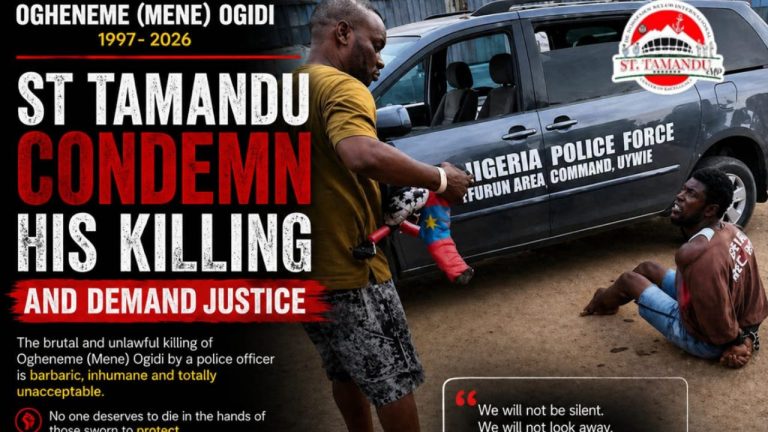
That this has become normalised within the system was made plain when the former Inspector General of Police, Kayode Egbetokun, issued a formal directive to his own officers, reminding them that respecting legally stipulated detention periods is a constitutional obligation. A police chief reminding his officers to obey the Constitution is not a reform. It is a confession. It tells you how far the culture of arbitrary detention has embedded itself into the very institutions meant to protect citizens from exactly that.
The human reality behind all of this is not complicated. Fathers who missed years of their children’s lives. Young people who entered detention and emerged years later without ever being convicted of anything. Families outside are carrying the weight of an absent breadwinner with no information, no timeline, and no recourse. The officer who described this to us did not raise his voice. He spoke with the flat calm of someone who has watched the same story repeat itself too many times to be shocked by it anymore. That resignation, in someone who works inside the system every day, stayed with us more than anything else.
There is, however, a reason for measured hope. Our parent body, De Norsemen Kclub International, has initiated Project K9, a structured programme aimed directly at prison decongestion and the freeing of inmates who have overstayed in Nigeria’s correctional facilities, not because they are guilty but because the system failed to process them. Several DNKI chapters across the country have already commenced this work on the ground. ST Tamandu Marine Patrol is committed to joining that effort. We do not intend to observe from a distance. This is a cause that sits at the very heart of what Service to Humanity means, and we will do our part.
What needs to change structurally is not a mystery. The judiciary requires urgent and serious investment in more judges, more courts, and capacity to address a backlog that has accumulated over decades of neglect. Legal aid must become a genuine and funded commitment rather than a constitutional footnote. Police officers who detain citizens unlawfully must face consequences beyond internal memos. And there must be a full, transparent public accounting of who is inside every correctional facility in Nigeria, on what charge, and since when. Reform cannot begin without honestly confronting the scale of what exists.
We visited that facility to give something. We came away understanding that the more important obligation is to speak. The people inside those walls are not statistics; they are not abstractions. They are citizens of this country waiting for a justice system that has, for too long, failed to arrive.
ST Tamandu Marine Patrol has not forgotten them. And we do not intend to stay quiet.