How Electoral Manipulation Is Silencing Nigerian Voters
Advocacy Series
There is a number that should embarrass every Nigerian who has ever held public office. In the 2023 general elections, out of 93.47 million registered voters, only 24.9 million cast their ballots. That is a voter turnout of 26.7 percent. The lowest Nigeria has recorded since returning to civilian rule in 1999. It means that of every four Nigerians eligible to vote, three stayed home. Not because they did not care. But because something inside them had already decided that it would not matter.
That conclusion did not appear from nowhere. It was built, carefully and over many years, by a political class that has treated elections not as an instrument of public will but as a game to be won by whoever controls the most resources, the most thugs, and the most vulnerable people in a room.
Vote buying in Nigeria isn’t a secret. It is not even a scandal anymore. It is a budget line. Political parties arrive at polling units with cash, food, and the quiet understanding that poverty is a more powerful weapon than any ballot. Research has established that failed leadership, bad governance, weak electoral institutions, and poverty are the major factors for vote buying in Nigeria’s electoral processes. The poor citizen who sells their vote for a few thousand naira is not a villain in this story. They are a symptom of a system that has consistently failed to give them any other reason to believe their vote is worth more than the cash in someone’s hand.
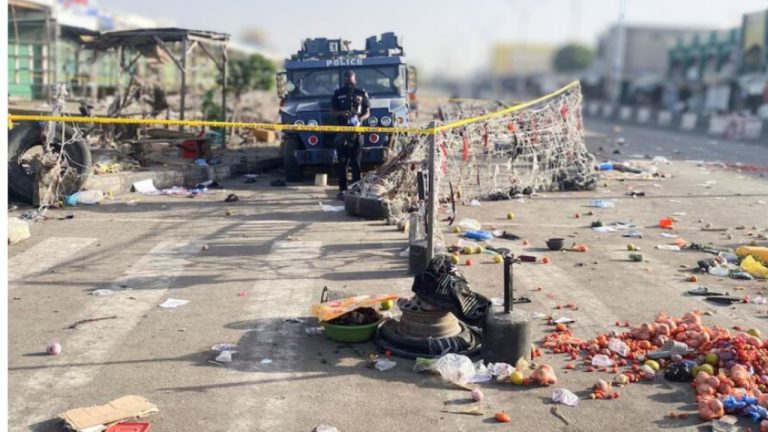
Intimidation works differently but achieves the same result. Reports from the 2023 elections confirmed that thugs were observed interrupting polls and intimidating voters in parts of Kogi and Lagos, while footage emerged of police officers either enabling the theft of ballot boxes or standing by while voters were disenfranchised. When a citizen watches a ballot box being stolen in broad daylight and the security forces assigned to prevent it look away, the message delivered is not subtle. Your vote was never really yours to cast.
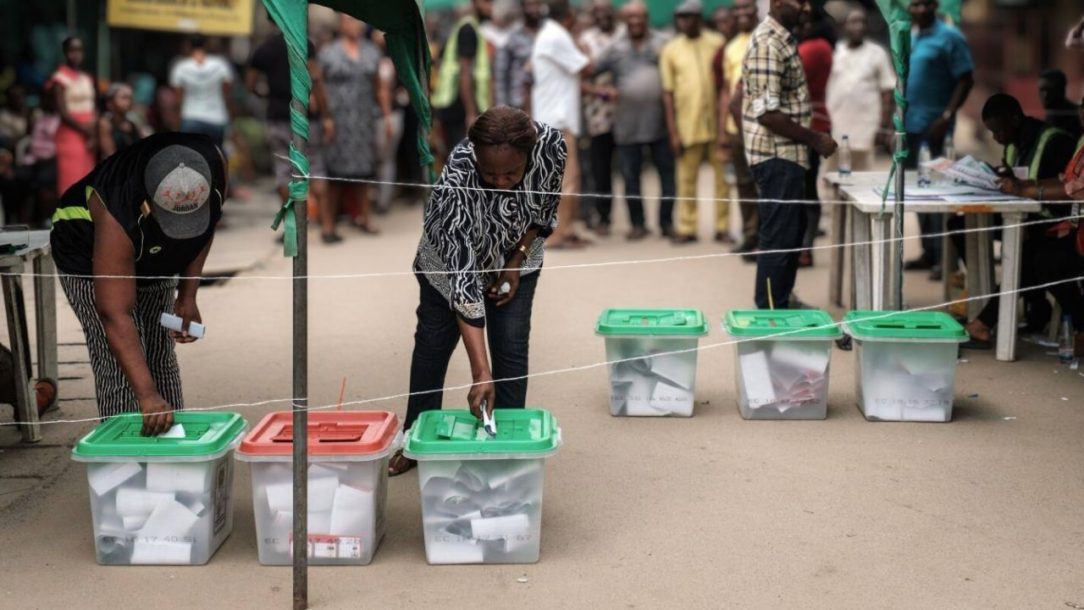
Then there are the logistical failures, which are harder to dramatise but equally effective at suppressing participation. INEC blamed transport companies for the delay in voting in some parts of the country in 2023, as many people were unable to vote due to the late arrival of voting materials. A citizen who queues for two hours and is then told that materials have not arrived, or whose polling unit opens three hours late, does not go home angry. They go home defeated. And they remember that defeat the next time an election is announced.
The technology that was supposed to change all of this became, in 2023, yet another source of disillusionment. The Bimodal Voter Accreditation System and the INEC Results Viewing portal were introduced with genuine promise. They had been heralded as game changers following successful deployment during the off-cycle gubernatorial elections in 2022, and had significantly raised popular hopes of a clean process. Their failure to live up to those expectations may have done more harm than good. Afrobarometer found that 78 percent of Nigerians said they had little or no trust in INEC by the time the 2023 results were announced. That figure, more than any other, tells you what the system has done to the people it is supposed to serve.
What makes this particularly dangerous is where the trajectory is heading. A Yiaga Africa survey conducted in December 2025 found that while 77 percent of Nigerians say they are likely or very likely to vote in 2027, 42 percent cite fear of violence as their primary barrier to participation. High intention. High fear. That combination is a recipe for another historic low turnout unless something changes structurally before 2027. The same survey found that 76 percent of Nigerians are unaware of recent electoral reforms, even though among those who are aware, 64 percent report increased voting confidence. The reforms that exist are not reaching the people they are meant to reassure. That is not a technical failure. It is a governance failure.
There is also a more insidious dimension to all of this that rarely gets discussed directly. Political elites continue to affirm the narrative that voters do not matter, and party defections to the ruling party have been framed, suggesting that joining the party guarantees electoral victory in 2027, regardless of voter choices. When politicians publicly behave as though the outcome is already decided, they are not just predicting the future. They are shaping it. Cynicism spreads. People disengage. And the game gets easier to win.
What can citizens actually do? The honest answer is that structural change requires structural action, and no individual citizen should be burdened with fixing what institutions are designed to handle. But some things matter. Collecting your Permanent Voter Card is not a bureaucratic exercise. It is the minimum entry to relevance in a democratic system. Voting, even in an imperfect system, is not naive. It is the one act the political class cannot control and cannot completely suppress without consequences. Civic education, the kind that explains rights, explains the Electoral Act, and explains how to report violations, is not a luxury. It is armour.
The new INEC Chairman, Professor Joash Amupitan, has publicly committed to five non-negotiable pillars for the commission to go forward: institutional independence, fairness, credibility, transparency, and inclusivity. If implemented, these standards could radically transform the electoral process and restore public confidence. That is a significant commitment made on the public record. Nigerian citizens should hold him to every word of it, and ST Tamandu Marine Patrol intends to play its part in ensuring that the communities we serve are informed, mobilised, and present at the polls in 2027.
Democracy does not die in a single dramatic moment. It erodes slowly, election by election, through a thousand small acts of manipulation and a thousand voters who decided it was not worth the effort. Reversing that erosion is not the work of one organisation or one election cycle. But it begins with refusing to accept that the game belongs to them.
The vote is yours. That is not a sentiment. It is a constitutional fact. Act accordingly.