
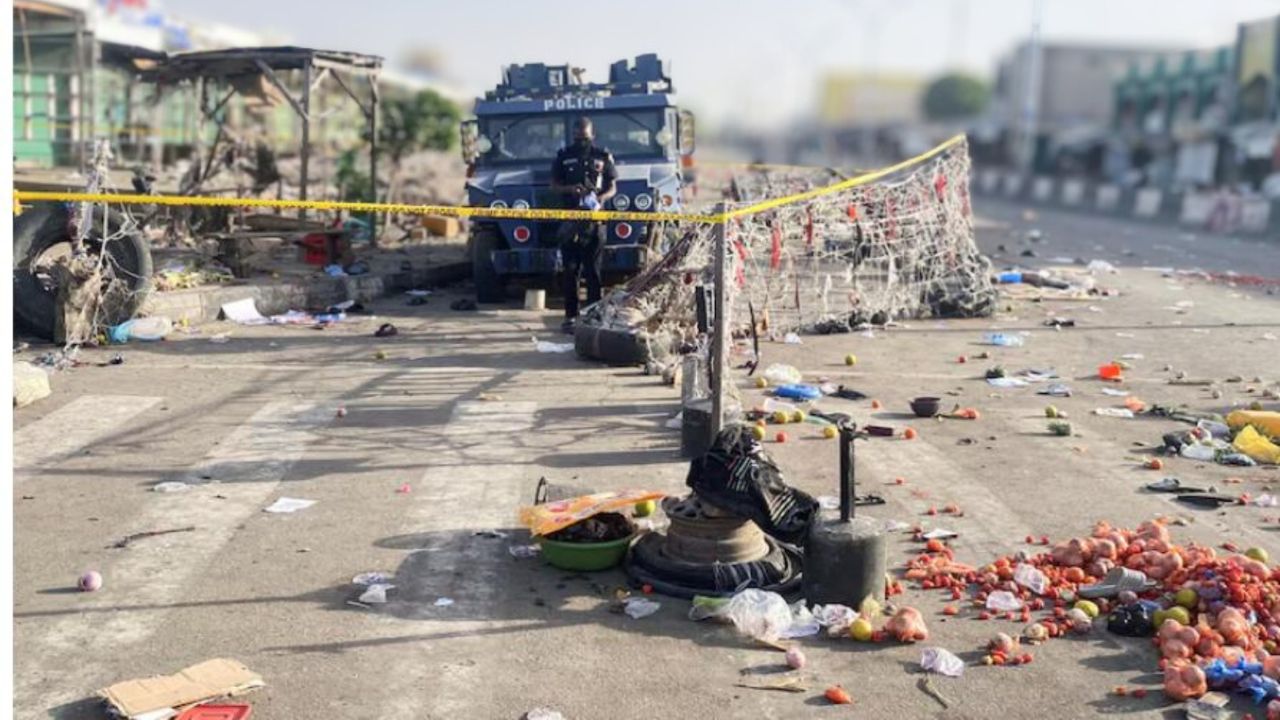
Maiduguri Is Burning Again

Seventeen Years of Insurgency, 23 Dead in a Single Night, and a Civic Call for Stronger Civilian Protection Across the Northeast
On the evening of 16 March 2026, as residents of Maiduguri broke their Ramadan fast, three coordinated suicide bomb attacks detonated across the city. The targets were the Monday Market, the Post Office area, and the entrance to the University of Maiduguri Teaching Hospital. Twenty-three people were confirmed dead. One hundred and eight were wounded. The attack came one day after the military repelled a separate assault on the city’s outskirts, and one week after over 100 Nigerian soldiers were killed in Borno State in a single seven-day period.
"While I could tell you so many people have died, to be honest, many lost their lives at the scene immediately after the bomb exploded. It's disheartening." Bagoni Alkali, eyewitness, speaking to the Associated Press, 16 March 2026.
The bombers struck during Ramadan, a period the military had itself identified as carrying heightened attack risk. Bridging the gap between threat intelligence and civilian protection in real time remains one of the most urgent challenges the northeast security architecture must solve.
SEVENTEEN YEARS: THE RECORD
The Boko Haram insurgency began in 2009. In the years since, it has fractured into multiple factions, including ISWAP, killed more than 38,000 people in Borno State alone, and displaced over two million Nigerians. Maiduguri experienced relative calm between 2021 and 2025. The December 2025 mosque bombing and the March 2026 triple attack have ended that reading. The calm was a pause. The insurgency reorganised.
Nigeria has made genuine military gains against the insurgency over the years, including the recapture of territory and the neutralisation of senior commanders. The December 2025 and March 2026 attacks are a reminder that gains made must be consolidated with equal investment in civilian protection, humanitarian recovery, and the economic conditions that sustain community resilience.
GAPS THAT MUST BE CLOSED
President Tinubu responded swiftly, directing security chiefs to relocate to Maiduguri and take charge of the situation. Governor Zulum visited victims on his return from the lesser Hajj and issued a public warning about two further active suicide bombers ahead of Eid. These responses reflect the seriousness with which both the federal and state governments regard the threat. ST Tamandu Marine Patrol welcomes that seriousness and calls for it to be matched with the structural investments that will translate immediate response into long-term civilian protection.
We identify the following as the structural gaps that, if addressed, would most significantly strengthen the protection of civilians in the northeast:
- Transparency on military casualties: Public confidence in the counterterrorism campaign depends on honest communication about its costs and progress. Greater transparency about military losses, delivered through authoritative and timely official channels, would strengthen rather than weaken public support for the effort.
- Civilian protection metrics: Measuring and publishing data on civilian casualty rates, displacement trends, and access to essential services in conflict-affected areas would enable more targeted interventions and demonstrate to affected communities that their welfare is central to the campaign, not incidental to it.
- Domestic humanitarian funding: International humanitarian funding for the northeast has declined sharply, from nearly $1 billion annually to a projected $262 million in 2026. Increasing the domestic funding allocation for Borno, Yobe, and Adamawa, transparently managed, would reduce dependence on external aid and signal the government’s commitment to the region’s long-term recovery.
- Civilian early warning system: Developing a framework through which military threat intelligence during high-risk periods generates direct civilian protection measures, including market advisories, enhanced crowd security, and hospital perimeter protocols, would save lives in future high-threat windows.
- A national register of civilian victims: Creating and maintaining a publicly accessible record of civilian lives lost to the insurgency since 2009 would honour those who have died, give their families formal state acknowledgement, and provide a foundation of verified data for policy and humanitarian planning.
OUR RECOMMENDATIONS
- Establish measurable civilian protection outcomes within Operation Hadin Kai, published quarterly, covering civilian casualties, displacement trends and essential services access.
- Improve the transparency and timeliness of official military communications on casualties and operational progress. Honest, authoritative communication about the cost and conduct of the campaign builds the public confidence and support that a sustained counterinsurgency effort requires.
- Implement a civilian early warning and protection system for high-threat periods. Intelligence indicating elevated attack risk must generate protective action for civilians, not only security force deployment.
- Increase domestic humanitarian funding for Borno, Yobe and Adamawa to replace the collapse in international aid. Resources must be transparently allocated and independently audited.
- Commission an independent review of the seventeen-year counterterrorism strategy including civilian voices from affected communities, and create a public register of all civilian victims of the insurgency since 2009.
CLOSING STATEMENT
The people of Maiduguri have buried their dead, rebuilt their markets, and continued to live in a city the rest of Nigeria has largely stopped paying sustained attention to. The bombings of 16 March 2026 returned that attention briefly. It will fade. ST Tamandu Marine Patrol calls on every Nigerian organisation, media outlet, and elected official to refuse to let it fade. This is not a regional crisis. The insurgency has already expanded. Maiduguri today is a warning about what happens when a security crisis is managed rather than resolved.
Twenty-three people went to a market or a hospital on the evening of 16 March 2026. They did not come back. They deserve more than a news cycle. They deserve the full weight of government protection, and a country that refuses to look away.
ST Tamandu Marine Patrol | De Norsemen Kclub International, Lagos Chapter | RC 7458 | www.santatamandu.org




salutamus all…
It is indeed a nice one and a wake up call for all hands to be on deck.
thanks